Roof Inspection in Squirrel Hill: 9 Checks Before the Snow Flies
A roof inspection in Squirrel Hill should happen before the first heavy snow, because most winter leaks we trace start at flashing and eaves that a fall check would have caught.
Excellence You Can TrustNow Serving PittsburghFree EstimatesInsurance Claim HelpLifetime Product Warranty24/7 Emergency RoofingRoofs, Siding, Gutters, Windows
Excellence You Can TrustNow Serving PittsburghFree EstimatesInsurance Claim HelpLifetime Product Warranty24/7 Emergency RoofingRoofs, Siding, Gutters, Windows
Excellence You Can TrustNow Serving PittsburghFree EstimatesInsurance Claim HelpLifetime Product Warranty24/7 Emergency RoofingRoofs, Siding, Gutters, Windows
Excellence You Can TrustNow Serving PittsburghFree EstimatesInsurance Claim HelpLifetime Product Warranty24/7 Emergency RoofingRoofs, Siding, Gutters, Windows
Home MaintenancePublished 8 min read
A roof inspection in Squirrel Hill should happen before the first heavy snow, because most winter leaks we trace start at flashing and eaves that a fall check would have caught. After last winter’s ice dams, a roof inspection in Squirrel Hill is cheap protection. Here are the nine checks we run, in plain English.
Quick Answer: What a Roof Inspection in Squirrel Hill Should Cover
A good roof inspection in Squirrel Hill covers nine things: the shingle or slate surface, flashing, valleys, vent boots, gutters and eaves, the chimney, attic ventilation, the underside of the roof deck, and the ceilings inside your home. It should end with photos and a written list of findings. Schedule it in fall, before snow sits on the roof. You can safely check from the ground and the attic. Only a roofer should walk the roof surface, and only when it is dry.
What Squirrel Hill Homeowners Usually Notice First
Most calls start with a symptom, not a plan. A brown stain near a bathroom fan. A damp smell in the attic after the first cold snap. Shingle pieces in the flowerbed after a windy night. Icicles on one corner of the porch roof but nowhere else.
Last February, a Crafton homeowner told WPXI that water first showed up at his bathroom exhaust fan, and then the ceiling paint began to leak. He had lived there about 10 years and had never seen an ice dam. That story is common. Water rarely shows up under the spot where it gets in.
Squirrel Hill adds its own clues. Many homes here are older brick and stone houses with chimneys, dormers, and porch roofs. Each one adds a joint where water can sneak in. A roof inspection in Squirrel Hill often starts with one simple question: where did you first see it? That answer tells us where to look first.
What a Roofing Contractor Looks For: The 9 Checks
A roofer evaluates a roof by looking at the weak points first, because water always finds them. Here is how a roof inspection in Squirrel Hill works when we do it.
Shingle or slate surface. On many roof inspections we see lifted tabs along the edges first, because wind gets under them there. We look for creased shingles, bare spots where the granules wore off, and slipped or cracked slate. A pile of granules at the bottom of a downspout is a clue.
Flashing. This is the metal at chimneys, sidewalls, and dormers. We check for rust, gaps, and dried-out sealant. On older brick chimneys, we also check the mortar joints next to the flashing.
Valleys. A valley carries more water than any other part of the roof. We look for worn shingles, packed leaves, and nails that have backed out.
Vent boots. The rubber collar on a plumbing vent cracks after years of sun and cold. It can leak slowly for a long time before a stain ever appears.
Gutters and eaves. We look for sagging sections, pulled-away fascia, and ice damage from last winter. Clogged gutters hold water against the roof edge, and that feeds ice dams.
Chimney. We check the cap, the crown, and the flashing around the base. A chimney is a common leak point because three different materials meet there.
Attic ventilation. What homeowners often miss is that ice dams start inside the house. Heat leaks into the attic, melts the snow on the roof, and the water refreezes at the cold edge. We check that insulation is not blocking the soffit vents and that bathroom fan ducts run outside, not into the attic.
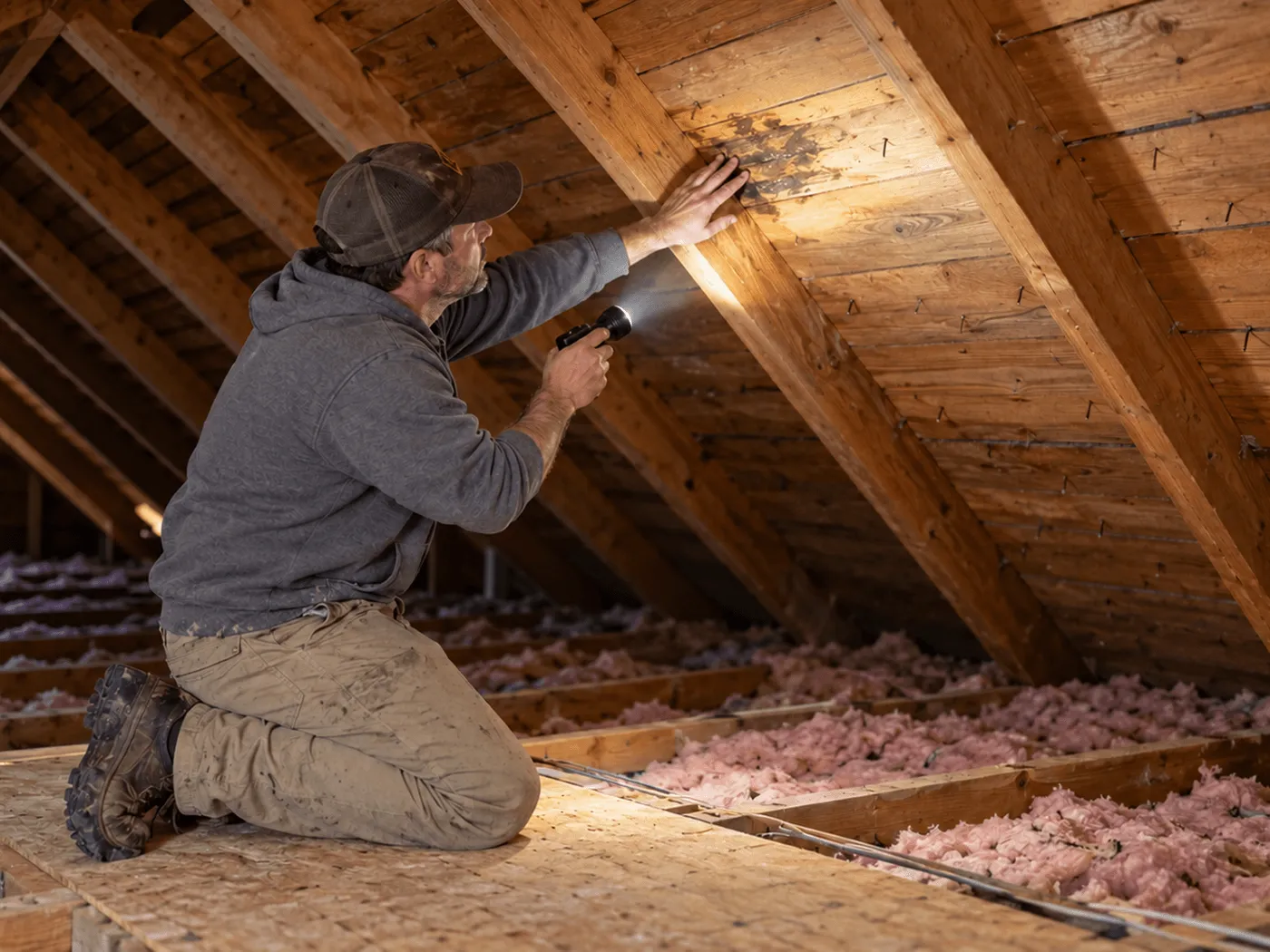
Underside of the roof deck. With a flashlight, we look at the wood under the shingles for dark stains, rusty nail tips, frost, and damp insulation. A roofer evaluates this by looking at the pattern. Stains in a line under a ridge point to a different problem than stains under a chimney.
Ceilings and walls inside. We look below the roof edges and chimneys for fresh stains, soft drywall, and bubbling paint. A moisture meter helps us tell an old stain from an active leak.
We take photos of each finding and explain it in plain words. A thorough roof inspection in Squirrel Hill ends with a written, line-by-line quote you can take your time with.
Common Mistakes Before Winter
The biggest mistake is climbing up to look. The National Roofing Contractors Association (NRCA) says homeowners should inspect only from ground level after storms, because the risk of falling is too high.
The next mistake is chipping at ice with a hammer. It cracks shingles and tears gutters. When an ice dam is already leaking inside, roofers melt it with steam or hot water instead. That is a job for a crew, not a ladder.
A third mistake is trusting the street view. A roof can look fine from the sidewalk and still have a cracked vent boot or a wet deck. A roof inspection in Squirrel Hill should include the attic for that reason.
Another mistake is waiting until spring. A cracked vent boot found in November is a small repair. The same boot after a winter of freezing can leave a wet deck and a stained ceiling.
The last mistake is thinking a new roof ends ice dams. It does not if the attic still leaks heat. Good ventilation and insulation matter as much as the shingles.
How to Decide: Repair, Replace, or Watch
Use the findings, not the sales pitch. A few lifted shingles or one cracked vent boot usually means a repair. Wide wear, repeated leaks, or a soft deck points toward replacement. If the roof is near the end of its life but sound, you can also choose to watch it and recheck in spring.
Before you decide, ask three things. How old is the roof? Is the damage in one spot or spread across slopes? Will the findings be written down with photos? If a contractor cannot answer those, keep looking.
Insurance adds a second question. Coverage depends on your policy, and a roof inspection in Squirrel Hill does not guarantee any claim result. Your insurer decides. A Pittsburgh Realtors’ association member has called roofs the most common homeowners-insurance issue Pennsylvania Realtors see, and noted that some insurers pay older asphalt roofs at actual cash value instead of replacement cost. Read your declarations page and ask your agent which one applies to you.
Here is how it can look in real life. A homeowner who reviewed Straight A on Google in November 2025 had wind damage. After the inspection, the homeowner reported the damage to the insurance company and waited for a decision. Then a final written quote arrived, and the roof was finished in five weeks, inside the four to six weeks we had stated. Another reviewer said our rep explained the materials, timelines, and logistics so nothing came as a surprise.
Weather and Roof Context for Squirrel Hill
NOAA’s latest climate normals, reported by WPXI, put Pittsburgh’s average snowfall at 44.1 inches a year. Last winter was heavier than most. One Pittsburgh-area roofer told WPXI in February 2026 that it was his busiest ice dam season in 16 years.
Freeze and thaw does the quiet damage. Water slips under a lifted shingle on a mild afternoon, freezes overnight, and pries the gap open a little wider. Repeat that for weeks and a small gap becomes a leak.
Wind is the other threat. On March 13, 2026, strong gusts lifted roofs off homes in Brookline and Lawrenceville and left debris on live wires in Carrick. On April 29, 2025, storms dropped a tree onto a car on Forbes Avenue in Squirrel Hill.
Mature trees between Schenley Park and Frick Park drop leaves into gutters and rub branches on shingles. Many homes here were built between about 1890 and 1930, so a roof inspection in Squirrel Hill often meets older slate, layered asphalt, and old chimneys. Slate needs a roofer who has worked with it, because matching old slate is hard.
Book a Free Roof Check Before the Snow
If you want a roof inspection in Squirrel Hill before winter, call the Straight A team. We are licensed and insured, an Owens Corning Preferred Contractor, and our team has 30+ years of combined roofing experience. We look at the roof, explain what we find in plain words, and give you a detailed quote. Nothing starts until you say yes.
How often should I schedule a roof inspection in Squirrel Hill?
The NRCA recommends at least two inspections a year, ideally in spring and fall, plus one after any severe storm. In Squirrel Hill, add one more trigger. Schedule a check any time a big limb comes down nearby, even if it missed the house. Branches can scrape shingles and bend gutters without leaving an obvious hole.
Is a free roof inspection really free, and what should I get in writing?
Ours is free, and nothing starts until you approve a quote. Ask for photos of each problem, a written list of findings, and a line-by-line quote. Be careful with anyone who knocks after a storm and pushes you to sign the same day. The Better Business Bureau has warned Pittsburgh homeowners about storm chasers after severe weather.
Will a roof inspection in Squirrel Hill help with an insurance claim?
It can help you document your roof’s condition, but it does not guarantee coverage. Check your policy for wind deductibles and whether your roof is paid at replacement cost or actual cash value. Report damage promptly and keep dated photos. No honest contractor should offer to cover or waive your deductible.
My ceiling stain only shows up in winter. Is it an ice dam?
Often, but not always. Check your bathroom exhaust fan first. If its duct ends in the attic instead of outside, warm wet air can frost the roof deck and drip when it warms up. Take dated photos of the stain and call before you patch the ceiling.
Can I check my roof myself before I call?
Yes, from safe spots. Walk the yard with binoculars and look for missing, curled, or lifted shingles. Check gutters for granules, then look in the attic with a flashlight for dark stains, wet insulation, or daylight. Do not climb onto the roof or a ladder to look at the surface.
Freeze-thaw cycles, ice dams, wet snow and a yard full of leaves all test a roof between November and March. Here is what to check this fall, and what to leave to a roofer.
Stay safe, stop the water, document everything and get the roof inspected before you accept a quick patch. A step-by-step guide for the hours and days after a storm.
Granule loss, curling shingles, repeat leaks and a soft deck are the signs that matter. What to look for from the ground and the attic, and what each one tells you.